
New Project Funding: Biodiversity and Aesthetics
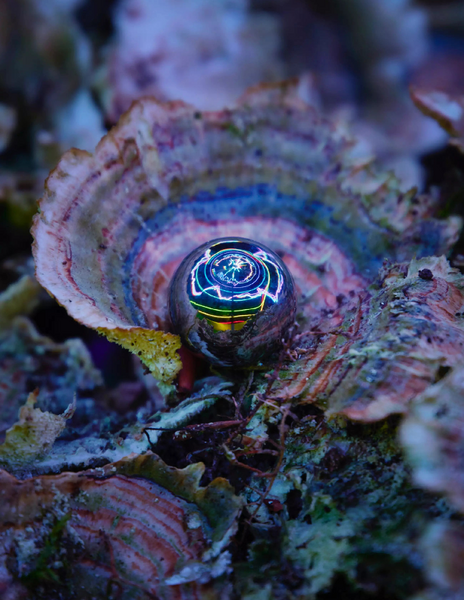
Alluvial: Biodiversity and Aesthetics is a new interdisciplinary research project based at Aarhus University and embedded in the Environmental Media and Aesthetics programme. The project is led by Aslak Aamot Helm and was funded in 2025 by the Novo Nordisk Foundation through a Mads Øvlisen Postdoctoral Fellowship in Art Theory and Natural Sciences.
Alluvial establishes a research framework across biodiversity science and contemporary art, developed in close collaboration with Natural History Museum Denmark and Museum für Naturkunde in Berlin.
The PI of the project, Aslak Aamot Helm, has a long track-record in art-science projects and knowledge exchange. He explains the project’s key background:
“Driven by accelerating environmental transformations, biodiversity science has become a pivotal field for understanding ecological adaptation, migration, and extinction. At the same time, advances in environmental DNA analysis, genomics, and large-scale data modelling have generated vast and complex data landscapes that challenge how knowledge is analysed, visualised, and communicated. Alluvial takes these developments as its point of departure, investigating how artists increasingly work with the methods, datasets, and infrastructures of biodiversity science—and how artistic practice can offer complementary ways of interpreting ecological uncertainty, scale, and change.”
Helm emphasizes the key role of “uncertainty” for contemporary natural history:
“While new tools such as environmental DNA analysis and large-scale ecological modelling generate unprecedented volumes of data, they often expose the limits of existing explanatory frameworks rather than resolving them. In rapidly changing ecosystems, scientific evidence can support multiple plausible interpretations, revealing the underdetermination of biological knowledge and the difficulty of stabilising ecological understanding in the face of accelerating environmental change.”
The project situates aesthetic research and artistic practice within this epistemological landscape, examining how to engage with biodiversity data, models, and scientific infrastructures to explore uncertainty, complexity, and the limits of human knowledge. By framing art and science as complementary responses to the challenge of understanding dynamic and unpredictable living systems, Alluvial contributes to broader debates in natural history, environmental media, and the aesthetics of ecological knowledge.
Alluvial is structured around three interconnected research strands addressing concepts of unknowability species discovery, fragility and mutability of ecosystems, and the aesthetics of biodiversity at evolutionary and planetary scales. These strands are developed through field work, interdisciplinary workshops and public programmes hosted at partner institutions in Copenhagen and Berlin, and through close engagement with artists whose practices already work with biodiversity data, modelling, and ecological repair.
The project is carried out in dialogue with Professor Jussi Parikka, whose work in media ecology and environmental aesthetics provides a key theoretical framework for understanding biodiversity data as a form of environmental media. Combining art theory, media studies, and natural science,
Alluvial exemplifies the Environmental Media and Aesthetics programme’s commitment to research that bridges cultural analysis and scientific practice, offering new ways of thinking about how we sense, model, and relate to rapidly changing environments.