
The cultural sector can become better at listening to children’s diverse voices
Children experience encounters with cultural institutions such as museums and theatres in very different ways. This is one of the findings of the research project BØV – Children’s Encounters with the National Cultural Heritage, conducted by researchers from Aarhus University. In collaboration with the National Museum of Denmark, the Royal Danish Theatre, and the National Gallery of Denmark, the researchers have examined the strategies these three cultural institutions use to ensure children’s right to encounter cultural heritage and how these encounters are experienced from the children’s perspective.

Children are different. This also applies to how they experience encounters with cultural heritage. This is one of the key points of the research project BØV – Children’s Encounters with the National Cultural Heritage, which over the past three years has examined how the three major cultural institutions — the National Museum of Denmark, the Royal Danish Theatre, and the National Gallery of Denmark — address children and how children experience these encounters.
“There are differences in what captures children’s interest in terms of content and which forms of communication appeal to the individual child. In work aimed at adults, segmentation has long moved beyond categories such as age, educational background, and occupation to also include attitudes, values, and interests. Our studies clearly show that children are just as diverse,” says Louise Ejgod Hansen, associate professor at the School of Communication and Culture and project leader of BØV.
The project is based on the premise that children should be regarded as cultural citizens with the same right as adults to experience and participate in culture. However, children’s independent scope for action is different, and the research project shows that children’s encounters with cultural institutions are largely framed by adults, both the staff of the institutions and the children’s parents, grandparents, or other close relations.
“Children’s encounters with cultural institutions are strongly shaped by different relationships and frameworks. If we want to give children greater influence over these encounters, it is therefore important to take their experiences and actions seriously — including at moments when they act in ways that differ from what adults or institutions expect,” explains Christiane Særkjær, postdoctoral researcher on the project.
In the research project, children have been invited to participate as co-researchers. Among other activities, the co-researchers conducted interviews with other children, drew representations of their experiences at the institutions, and used photography to explore what was particularly important in their experiences. This material forms part of the project’s overall empirical data.
“It has been both challenging and enriching to invite children into the research process. It has provided insights into children’s own reflections and perspectives that would have been difficult to obtain in other ways,” says Christiane Særkjær.
Children’s cultural participation is a right
The researchers’ studies show that efforts to create frameworks for children’s participation vary considerably among the three institutions. At the National Gallery of Denmark, the children’s experience is anchored in the Children’s Workshop, where children and young people can try creating art themselves. At the National Museum of Denmark, children have for many years been able to visit the Children’s Museum, where they can touch objects, dress up, and play with cultural heritage. Meanwhile, the Royal Danish Theatre is currently working to create a new experience space for children in the theatre building Stærekassen in Copenhagen.
“When we look at the strategic efforts to involve children over time, the picture is uneven. The focus on children has fluctuated over the years and has been shaped by changing views of children as well as by project-based initiatives,” explains Louise Ejgod Hansen.
Part of the explanation may lie in the political framework. The United Nations Convention on the Rights of the Child grants children the right to participate in cultural life, but this right has not been implemented in Danish cultural policy.
“It is important that children encounter art and culture — this is a standpoint that is easy to agree on. But it is not easy to translate into action,” explains research assistant Mette Langeberg Lund.
In addition to contributing new research, the project also aims to foster dialogue across cultural actors as well as between research and practice.
“We hope the project can inspire others to be curious about children’s encounters with cultural heritage and to reflect on how physical and institutional frameworks, as well as adults’ perceptions of children, are crucial to how these encounters unfold,” says Louise Ejgod Hansen.
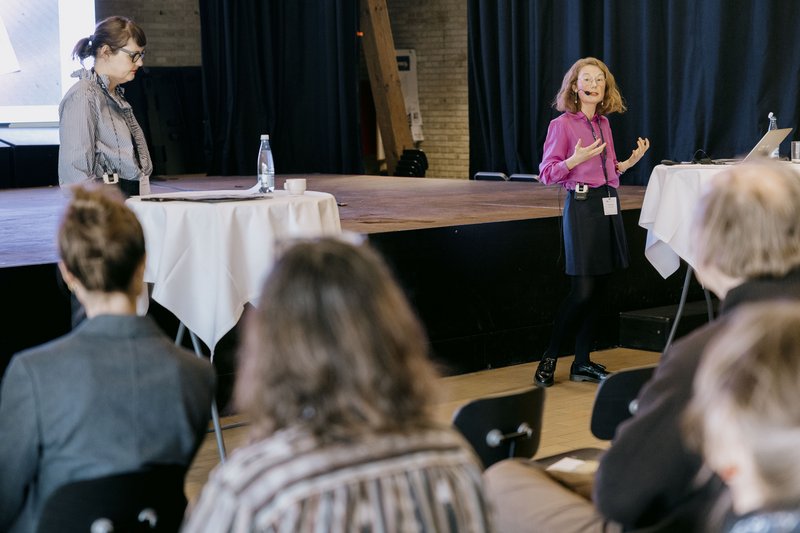
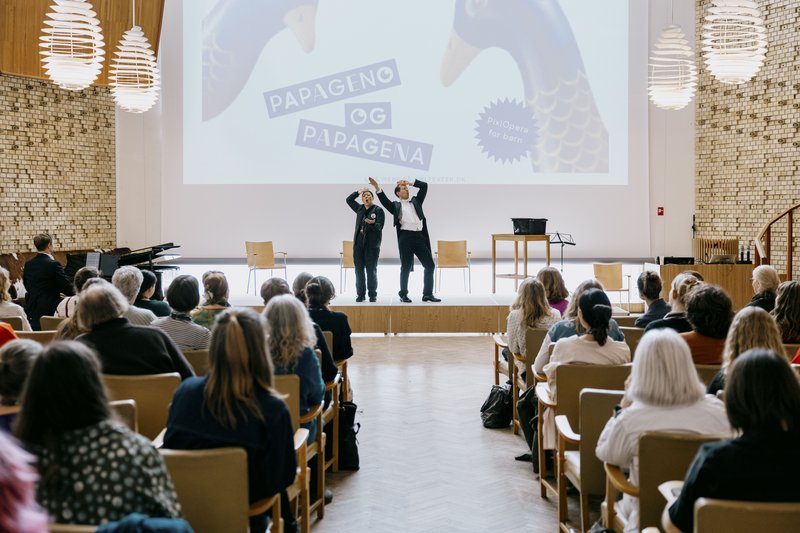
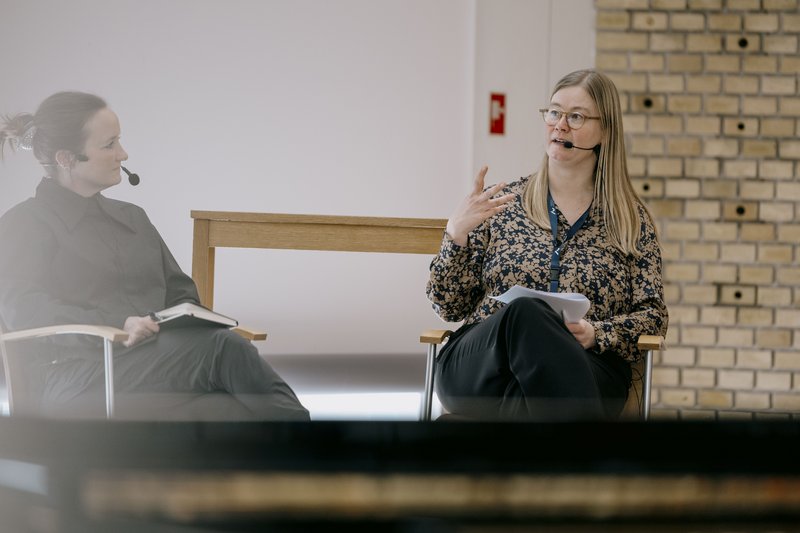
The results of the research project were presented at the conference BØV – Children’s Encounters with the National Cultural Heritage on 9–10 March 2026 at Aarhus University.
The project’s final publication can be accessed here: https://tidsskrift.dk/buks
Facts
BØV – Children’s Encounters with the National Cultural Heritage.
The project was conducted in collaboration between Aarhus University, the Royal Danish Theatre, the National Gallery of Denmark, and the National Museum of Denmark.
The project team consists of Louise Ejgod Hansen (project leader), Christiane Oved Særkjær (postdoctoral researcher), and Mette Langeberg Lund, School of Communication and Culture, Aarhus University; Nina Gram, Royal Danish Theatre; Michael Hansen and Nana Bernhardt, National Gallery of Denmark; and Nanna Holgaard and Rikke Tjørnehøj, National Museum of Denmark.
The project is supported by the Augustinus Foundation.
Contact
Louise Ejgod Hansen
Lecturer, Department of Dramaturgy and Musicology
School of Communication and Culture
Aarhus Universitet
Phone: 25566935
Mail: draleh@cc.au.dk
Christiane Særkjær
Postdoc, Department of Art History, Aesthetics and Culture, and Museology
School of Communication and Culture
Aarhus Universitet
Mail: saerkjaer@cc.au.dk