
New Grants from the Carlsberg Foundation for Five Exciting Research Projects
The Carlsberg Foundation has recently awarded a total of 11.5 million DKK to five research projects at the Department of Communication and Culture. These projects cover a wide range of topics, including Danish dialect collections, how humans and AI collaboratively create hidden patterns, regional relationships shaped by Danish colonialism, the afterlife of environmental narratives, and the connection between Irish adaptations of Greek tragedies and increased societal awareness.

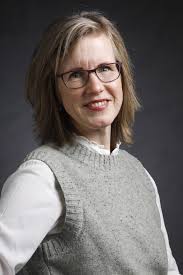
Researcher: Inger Schoonderbeek Hansen
Project: LEGACY OF LANGUAGE: THE DANISH DIALECT CORPUS (DIACORP)
Grant: DKK 980,634 (Digital Research Infrastructure Grant)
What is your research project about?
My project aims to establish an Open Access digital research infrastructure providing access to Danish dialect collections (1870–1930), the Danish Dialect Corpus, DiaCorp. The corpus is essential for understanding linguistic variation and change in Denmark’s “periphery” (Jutland).
How will you investigate it?
The digital infrastructure will be developed together with colleagues from the Peter Skautrup Centre for Jutlandic Dialect Research and the Center for Humanities Computing. It will provide access to collections of unique linguistic and cultural-historical value. Currently, the irreplaceable collections—comprising 3.1 million paper slips (excerpts)—are only physically accessible. The digital infrastructure will enable both domestic and international researchers to conduct quantitative and qualitative studies of this unique linguistic and cultural heritage.
Why is it important?
My research focuses on how Jutlandic dialects are represented in different orthophonic writing systems—alternative spellings that approximate the sound of local dialects—to explore the relationship between speech and writing over approximately 150 years. DiaCorp is a treasure trove of dialect representations, ranging from highly detailed phonetic transcriptions to rough renditions using letters and symbols.
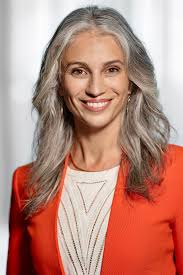
Researcher: Anja Bechmann
Project: PLATFORM COLLECTIVE BEHAVIOR AND THE MAKING OF DEMOCRACY
Grant: DKK 1,093,214 (Monograph Fellowship)
What is your research project about?
The project allows me to consolidate 15 years of research into a comprehensive theoretical and methodological framework, hopefully benefiting the field. It introduces a new framework for understanding platform-based collective behavior, showing how humans and AI collaboratively create hidden patterns that shape democracy. From misinformation and filter bubbles to extended platform usage, it uncovers subtle dynamics and offers new theoretical and methodological tools to make large-scale online collective behavior visible, understandable, and analyzable.
Why is it important?
We increasingly depend on opaque, personalized, AI-driven big tech platforms, but researchers have limited means to study their dynamics. Such dynamics can exacerbate democratic challenges related to transparency, cohesion, equality, privacy, and trustworthy information. While existing research has examined platform power, few studies empirically map collective behavior across national populations. This project fills that gap by theorizing and mapping “in the wild” behavior using large-scale data within a social-scientific and computational communication framework. By reconceptualizing collective behavior as a large-scale, socio-technical, and actor-based phenomenon, it provides an alternative to existing media theories on coordinated participation and communities, while advancing debates on transparency and accountability, ultimately contributing to democratic resilience in an AI-driven society.
Researcher: Daniela Agostinho
Project: REPARATIVE ENCOUNTERS: REPAIRING DANISH COLONIAL LEGACIES THROUGH ARTS-BASED COLLABORATION
Grant: DKK 6,418,340 (Accelerate Grant)
What is your research project about?
Our project investigates the relations, differences and solidarities between the US Virgin Islands, Ghana, Kalaallit Nunaat and the Faroe Islands, regions differently impacted by Danish colonialism. The project employs artistic collaboration across these regions to generate dialogue between different colonial experiences.
How will you investigate it
Our approach employs artistic collaboration between scholars, artists and curators. We will organise artist residencies, a traveling exhibition and seminars in all the locations to generate new knowledge and foreground overlooked perspectives through art creation. We conceive exhibitions as both a method for knowledge production and dissemination of the project’s insights.
Why is it important
We still do not know enough about how these different colonial legacies interrelate. Danish colonialism forcibly connected these regions through colonial practices, but it also severed communities from their histories, identities, and cultural expressions. We contend that these colonial legacies require reparative approaches that can be developed through artistic collaboration.
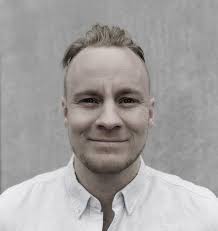
Researcher: Nicolai Skiveren
Project: THE AFTERLIVES OF STORIES: EXPLORING THE LONG-TERM IMPACT OF ENVIRONMENTAL NARRATIVES
Grant: DKK 1,945,091 (Reintegration Fellowship)
What is your research project about?
This project explores the afterlives of environmental narratives by asking what happens once we’ve put a novel back on the shelf, turned off the television, or scrolled past a climate change video on our phone. By examining how films, television, and social media stories linger, change, or fade, the project seeks to understand media’s role in shaping public engagement with the climate crisis.
How will you investigate it?
Stories can shift how we see the world and ourselves, making them powerful tools for addressing the climate crisis. While past research has shown that storytelling can spark emotions, awareness, and short-term behaviour change, we know very little about its long-term effects. This project fills that gap, offering insights into how narratives can affect citizens navigating multiple global crises.
Why is it important?
Two studies will track narrative reception over time. The first will document how a single story can unfold across six months, using interviews and surveys with Danish citizens. The second study will map how young adults experience the wider flow of environmental stories in their daily digital lives. Together, they will provide the first in-depth look at the afterlives of environmental narratives.
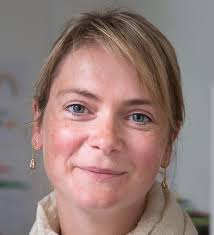
Researcher: Isabelle Torrance
Project: GREEK TRAGEDY AND HUMAN RIGHTS: THE CASE OF IRELAND
Grant: DKK 1,051,207 (Monograph Fellowship)
What is your research project about?
This project posits a correlation between the agitation for human rights expressed in Irish adaptations of Greek tragedy (as theatre productions, films, novels) and increased social awareness leading to the implementation of legal or societal change. Through methodology of a Human Rights-Based Approach, the project develops a new critical pathway in the field of classical reception studies.
Contact Information
Associate Professor, Nordic Language and Literature
Department of Communication and Culture, Aarhus University
Phone: +45 92521699
Email: jysis@cc.au.dk
Professor, Media Studies
Department of Communication and Culture, Aarhus University
Phone: +45 51335138
Email: anjabechmann@cc.au.dk
Associate Professor, Department of Digital Design and Information Science
Department of Communication and Culture, Aarhus University
Email: dagostinho@cc.au.dk
Nicolai Skiveren
Postdoc, English
Department of Communication and Culture, Aarhus University
Email: nicolai.skiveren@canterbury.ac.nz
Professor, English
Department of Communication and Culture, Aarhus University
Phone: +45 93522172
Email: itorrance@cc.au.dk
Mathias Holm Guldberg
Communications Officer
Department of Communication and Culture, Aarhus University
Phone: +45 22 13 31 37
Email: magu@cc.au.dk