
New Punk Exhibition at ARoS Curated by AU Postdoctoral Researcher
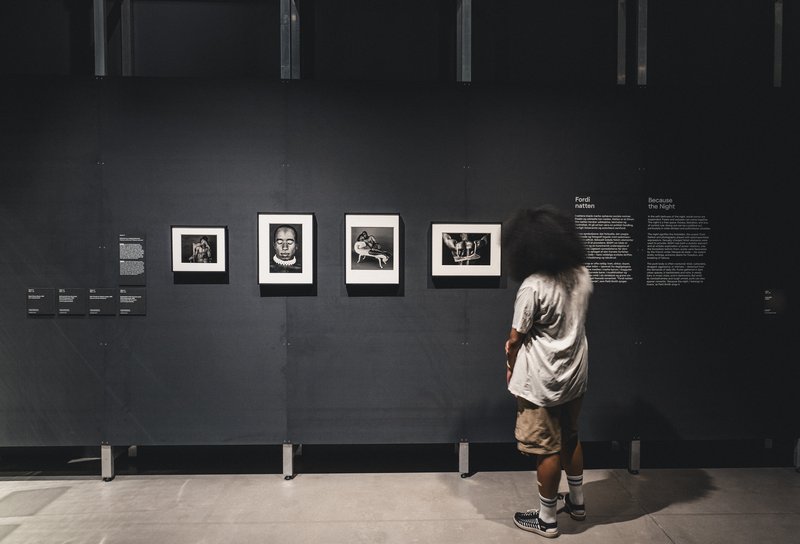
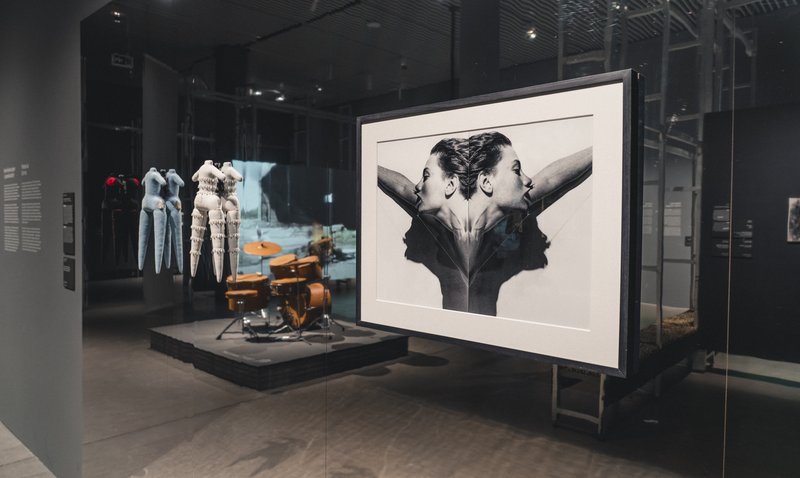
"Ulydig – Kroppen i punk" is a newly opened exhibition at ARoS, developed from a postdoctoral research project by Marie Arleth Skov from the School of Communication and Culture at Aarhus University in collaboration with ARoS. Skov also serves as the exhibition’s curator. Bringing together more than 100 works, the exhibition takes visitors back to the origins of punk in 1970s London and traces how the movement spread and evolved, with particular attention to the subcultures of Berlin. At its core, the exhibition explores how the body became a political medium in punk. Through expressions of pain, defiance, and raw energy, the works reveal how punks used their bodies to resist discipline, convention, and the social order of a world they believed to be in decline. We spoke with Marie Arleth Skov about her longstanding fascination with punk and the research behind the exhibition.

Where did your interest in punk as a movement come from?
"I’ve loved punk music and punk fashion since I was a teenager. I was born in 1980, and those formative years between the ages of around 13 and 18 were shaped by grunge and the Riot Grrrl movement. That was my gateway into punk. When I was 19, I moved to Berlin, where I studied art history at Freie Universität. There, I began to notice how much Dada, Surrealism, Fluxus, and punk had in common. That observation eventually became the subject of my PhD, which was later published as the book Punk Art History (Intellect Books, UK)."
What is your postdoctoral research project about?
"In short, it’s about the body in punk. The project builds on and expands one of the key themes from my PhD. I wanted to explore the connections between punk as a form of youth rebellion and as an underground art movement, and to examine how resistance is embodied. The project focuses on punk in the 1970s and 1980s, when punks’ appearance and physical expression genuinely shocked mainstream society. From an art historical perspective, I was interested both in the movement’s physical, material, and aesthetic forms of expression, and in analysing how they relate to earlier avant-garde movements."
How has your research informed your work as curator of the exhibition?
"Above all, the postdoctoral framework gave me something that curators rarely have: time. I had the opportunity to spend extensive periods conducting research and working in archives. That’s how, for example, I discovered the filmUNDERDOGS, which is featured in the exhibition. It documents the bands Sods and Billedstofteatret in 1980 and had been preserved on 16mm film in cold storage at the Danish Film Institute, unseen for decades. Even the filmmakers themselves believed it had been lost. The exhibition catalogue, which includes nine essays by international scholars as well as two interviews, also reflects the benefit of having had the time to develop it thoroughly. I’d also like to mention that this autumn we will be hosting a symposium in connection with the exhibition. It’s called Noise & Vision, and the call for papers is currently open."
What has it been like to curate the exhibition, and is this your first experience as a curator?
"I’ve worked with exhibitions for many years. While I was a student, I worked as a student assistant at Gropius Bau. I’ve curated numerous smaller exhibitions, and for a period I co-ran an independent exhibition space in Berlin together with my friend Valeska Hageney. Over the past four years, I’ve worked as a research associate at the Kunstbibliothek in Berlin, where I curated an exhibition on avant-garde knitwear designer Claudia Skoda and the West Berlin subculture from the 1970s and 1980s. If, as with Ulydig, I have the opportunity to combine research and curating, that’s what I enjoy most."
The exhibition "Ulydig – Kroppen i punk" is on view from 27 June to 13 December 2026.
Read more about the exhibition here.
The three-year research project is funded by the New Carlsberg Foundation.
Contact
Marie Arleth Skov
Postdoctoral Researcher, Department of Art History, Aesthetics & Culture and Museology
School of Communication and Culture
Aarhus University
Phone: +45 61904857
Email: mask@aros.dk