
Fear of Heights, Bones and Malls: How the Recreational Fear Lab Took Over Aarhus During the Autumn Break
From VR vertigo to hand-drawn monsters, the Recreational Fear Lab turned an Aarhus shopping mall into a playground for fear during the 2025 autumn break.
By Ani Ngoc, Henny Felby, Jess Brinch, Lykke May Henriksen, Mulle Birch Olsen
During the Autumn break of 2025, the Recreational Fear Lab paid a visit to Storcenter Nord in Aarhus, setting up shop for a week of spooky entertainment for all ages! In the spirit of Halloween, the Recreational Fear Lab hosted three small exhibits, each relating to fear in one form or another. The “Draw a Monster” station allowed children and their parents to bring their frightening imagination to life, while our small VR simulation: “Test your Fear of Heights” would play tricks on the senses of all those brave enough to participate. Our third exhibit was the largely autonomous “Rate your Fear Face,” where a facial scanning software would rate the fearful grimaces of the passing mallgoers.
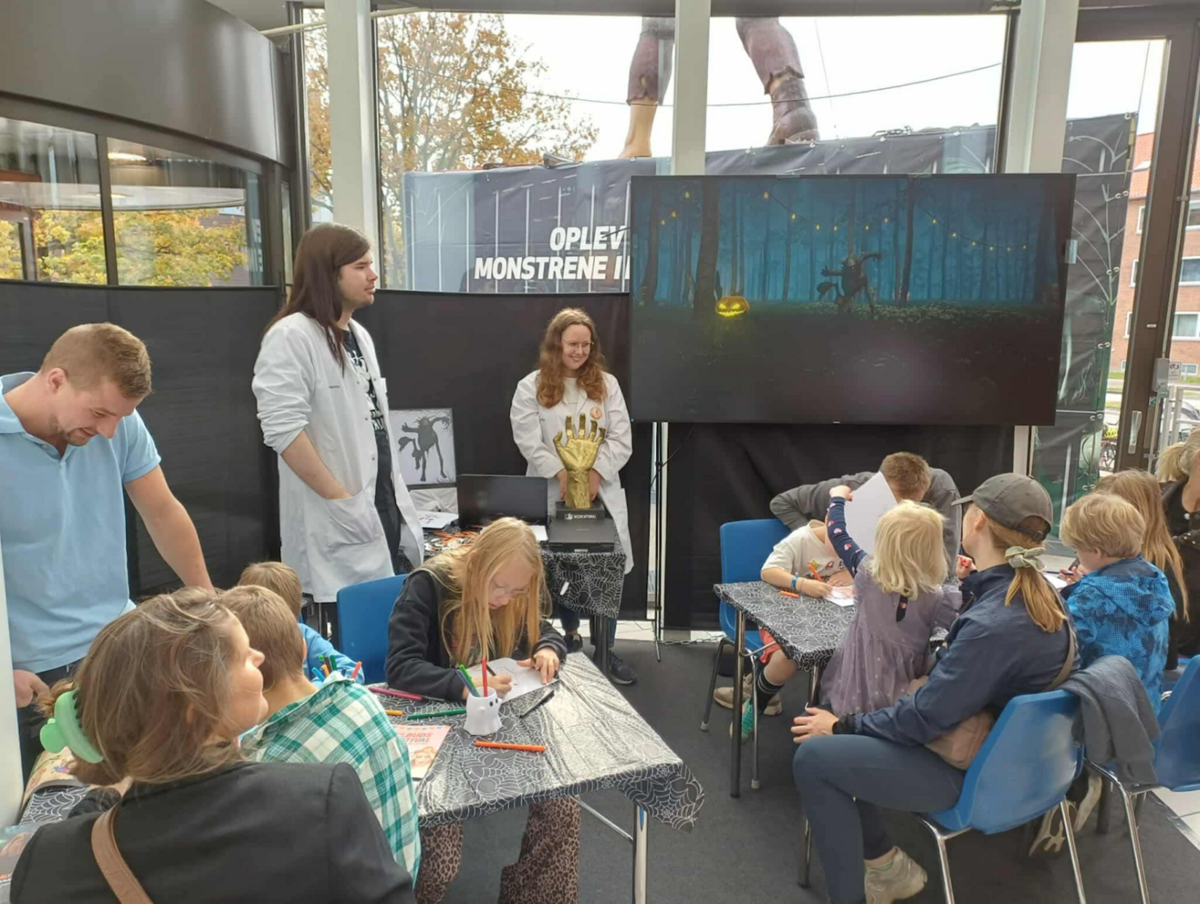
In addition to the entertainment value, our exhibits provided us with ample opportunity to spread awareness of our work at the Recreational Fear Lab to those who were interested in learning more about our research into recreational fear and horror.
Drawing Monsters
In the corner of Storcenter Nord’s foyer, the children of Aarhus found a place where they could draw the scariest monster they could imagine and bring it to (un)life on a big screen. We saw many kinds of monsters: everything from Frankenstein's monster to Hello Kitty with a pumpkin for a head. Many kids loved this station and would draw more than one monster if allowed to do so.
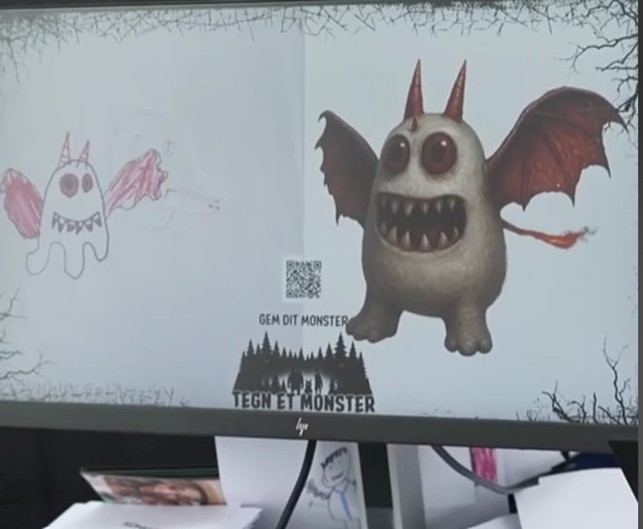
We found it especially interesting to observe which monsters the children were most interested in drawing. Especially monsters such as ghosts, monsters with animalistic traits such as fangs, and many-limbed monsters were exceedingly popular. This was to be somewhat expected as research shows that children around the age of four begin “fearing wild animals, monsters, and death” (Clasen 2021, 107). Many children would draw the monsters they saw around Storcenter Nord’s Halloween exhibit, such as pumpkins and Frankenstein’s Monster, while others were inspired by illustrations in Storcenter Nord’s event booklet, which highlighted the various programs and themes of the event. This could indicate a sort of cyclical nature of horror monsters as “artefacts;” by re-introducing classic monsters and their horror-inducing features, these features become rooted as traditional within horror, which perpetuates them as being re-introduced again and again. However, the children had a way of mixing and matching these different elements of monster-building, such as a cat with a pumpkin head, or a spider with sharp teeth and human-like appendages.
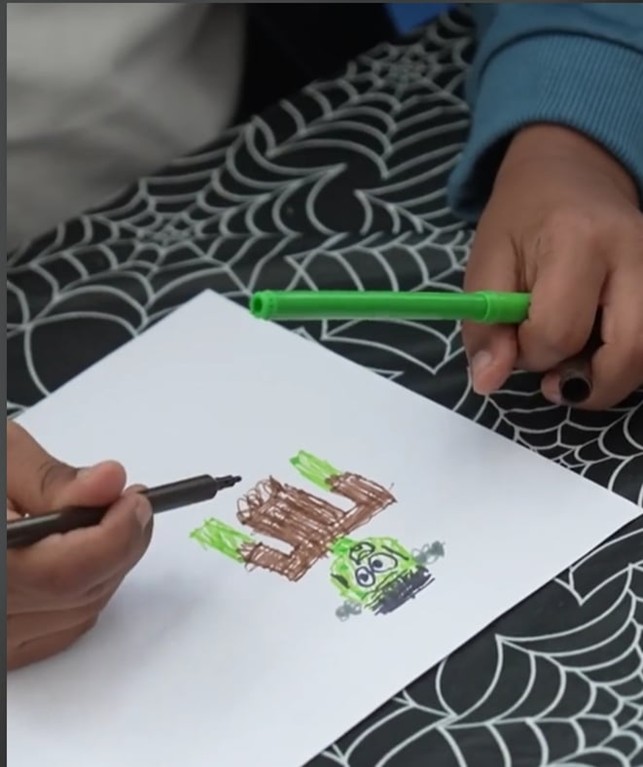
The children were fully captivated by the idea of generating a monster and watching it become animated in front of them, some of them willing to spend over half an hour waiting patiently (most of the time) for their monster to show up in its new form. Many of the children loved their drawings so much that they took them home, and they may still be adorning the various fridges and cupboards of Aarhus’ family homes.
This was such a fun and educational experience for both us and, we hope, the parents, as we were able to talk with many of them and share knowledge about our research. Some of the parents’ questions pertained to how exactly our in-house software worked and how we were able to generate these monsters. Some parents were also interested in discussing how horror and being scared helps children navigate and regulate their emotions from an early age. And, of course, some were just interested in keeping their children occupied with some recreational drawing, which was more than welcomed!
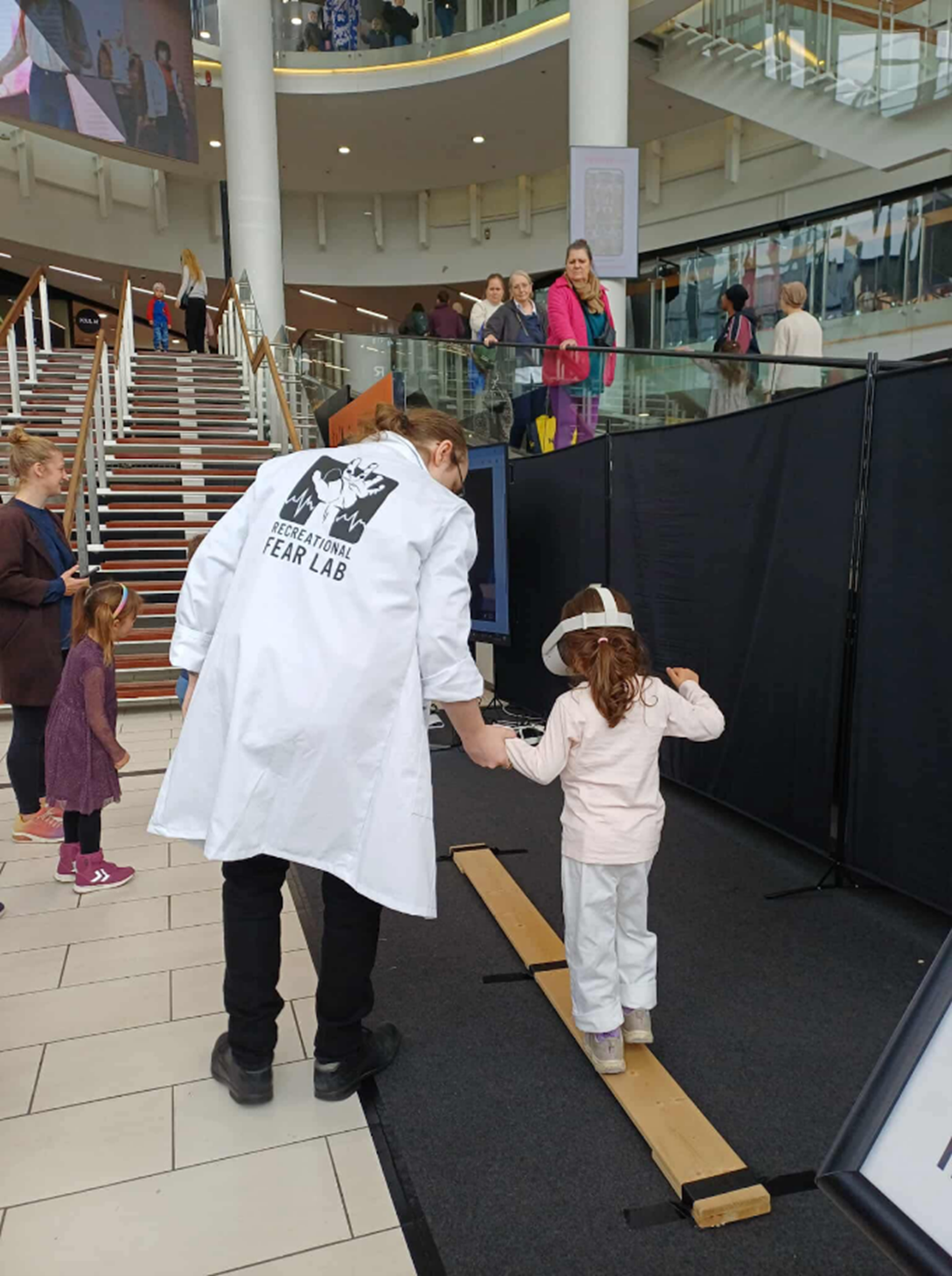
Apart from watching their monstrous drawings come to life, children (and parents) were given the opportunity to face their fear of heights. With the help of a wooden plank and a Meta Quest VR headset, brave volunteers “walked the plank” suspended far above the virtual ground - a surprisingly convincing experience.
Our goal with this VR experience was, first of all, to provide a safe setting in which children could test their fear of heights (or lack thereof). In other words, to provide a valuable learning experience for children who, as research from the lab shows, love to play with fear (Taranu et al. 2025). In fact, Taranu et al.’s research shows that activities involving speeds, heights, or depths are, by far, the most popular kinds of recreational fear among children aged 1-17 (Taranu et al. 2025). This was also our experience. Children of all ages approached us with a huge grin on their face, and while that grin often turned into a look of concentrated determination while walking the plank, it inevitably reappeared once the experience was over. Many children even returned to walk the plank again after their first go, this time moving more confidently and faster than before, some opting, despite our best efforts to stop them, to jump off the plank into their (virtual) death. Adults, on the other hand, were generally not comfortable with the VR plank experience and often “tapped out” the moment they put on the headset. Why? We had assumed that adults, possessing a fully developed, fear-regulating prefrontal cortex, would have an easier time convincing themselves that “this is not real,” whereas children might more easily be convinced by the virtual world.
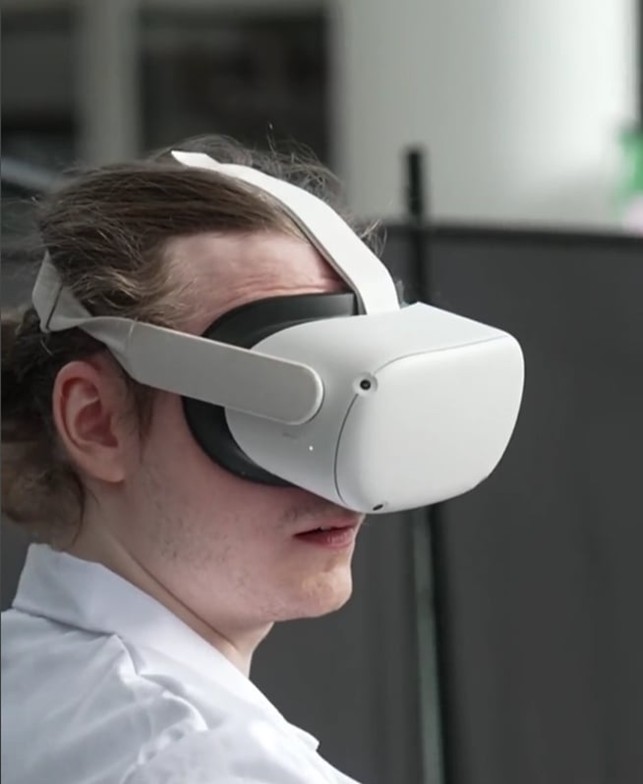
So, what’s going on? One explanation is that adults trust their sensory input more than children and are thus more strongly inclined to follow the “better-safe-than-sorry-protocol” that usually keeps us out of harm's way. In other words, adults take fewer risks. Furthermore, we hypothesize that children treat the VR experience more like a fun, interactive game, whereas adults perceive the virtual world first and foremost as a threat, not a game. Research also shows that young children respond more strongly to perceptual (visual) qualities than they do conceptual (abstract) qualities (Clasen 2021, 107). Despite its vertigo-inducing views, the VR experience presents itself in a non-threatening visual style, almost cartoonish — there are no visual threat cues, apart from the fact that the player is suspended far above a busy street. Children who are accustomed to this visual style in games like Fortnite and Roblox have, as we found, little difficulty adjusting to this virtual world. Older children and adults, on the other hand, who respond strongly to conceptual qualities, concerned themselves more with the thought of what might happen if they fell. The VR plank experience was, all things considered, a great success.
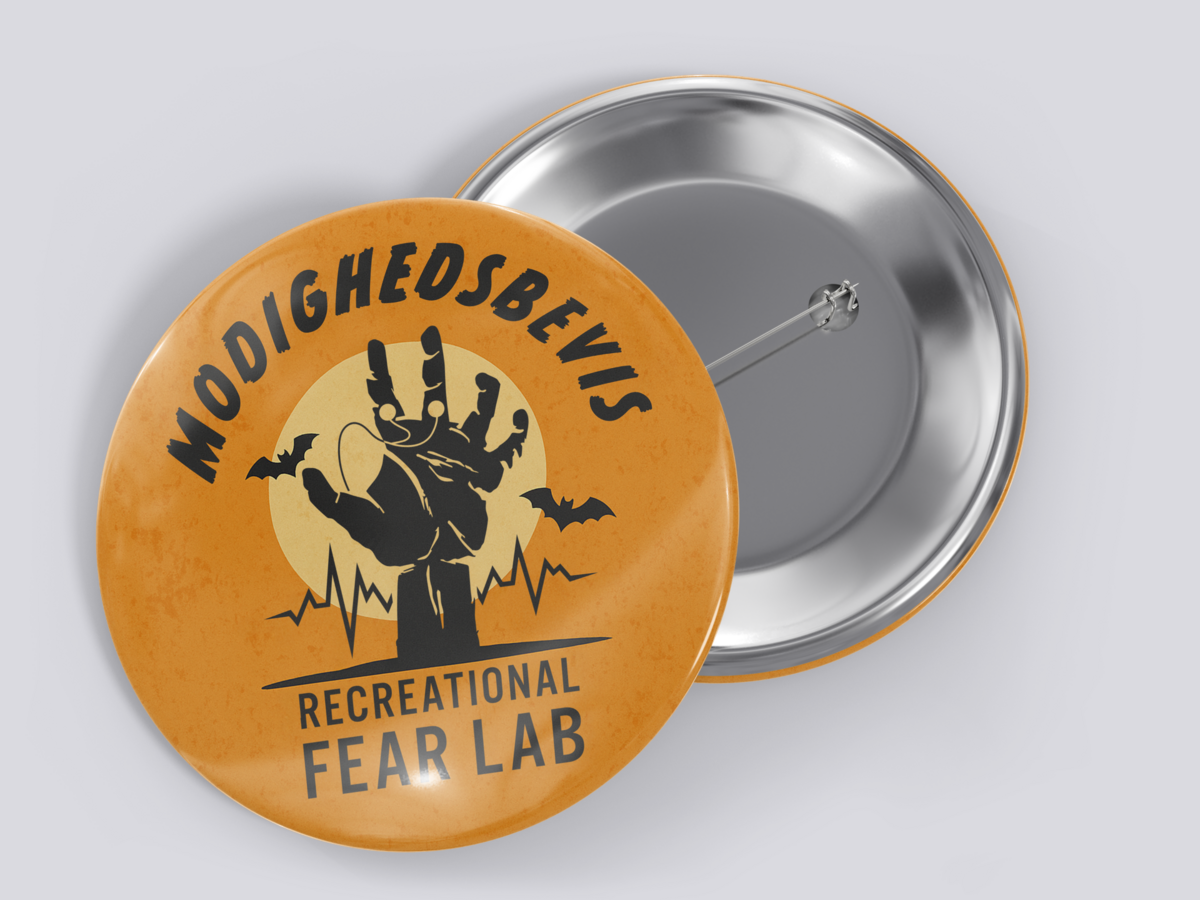
Throughout our week of spooky entertainment, we learned that kids are far more willing to face their fears than we thought. All of our stations were constantly busy with children excited to push the limits of their fears. Even our unmanned “Rate Your Fear Face” station, which scanned faces for an expression of fear on a scale from 1 to 100, was a hit. The kids earned their well-deserved candy at the “Draw a Monster” station for their artistic prowess and a custom made RFL badge of bravery at the “Test your Fear of Heights” VR station. We wrapped up at the end of the week with a sense of accomplishment at representing the Recreational Fear Lab and we can only hope that every kid and parent that participated had half as much fun as we did!
Reference List
Boyer, Pascal and Brian Bergstrom. 2011. “Threat-Detection in Child Development: An Evolutionary Perspective.” Neuroscience & Biobehavioral Reviews 35 (4): 1034–1041.https://doi.org/10.1016/j.neubiorev.2010.08.010.
Clasen, Mathias. 2017. Why Horror Seduces. New York: Oxford University Press.
Clasen, Mathias. 2021. A Very Nervous Persons's Guide to Horror Movies. New York: Oxford University Press.
Martin, G. Neil. 2019. “(Why) Do You Like Scary Movies? A Review of the Empirical Research on Psychological Responses to Horror Films.” Frontiers in Psychology10.https://doi.org/10.3389/fpsyg.2019.02298.
Taranu, Mihaela, Mathias Clasen, Fernando E. Rosas, Helen Dodd, and Marc Malmdorf Andersen. 2025. "Recreational Fear Across Childhood. A Cross-Sectional Study of Scary Activities that Children Enjoy." Child Psychiatry & Human Development.https://doi.org/10.1007/s10578-025-01850-2.