
Emotional Forecasting in an Immersive Horror Experience
How accurately can we predict how a frightening experience will make us feel? A field study at Dystopia Haunted House reveals why our emotional forecasts are often too gloomy - and how discomfort with uncertainty shapes what we experience.
Ping! You receive a message from a friend:
“I’ve bought us tickets to Dystopia Haunted House tomorrow! Get ready for the fright of your life!”
What goes through your head?
Perhaps you feel a surge of excitement. Perhaps you immediately start wondering what you’ve signed up for. Or perhaps you’re already imagining yourself hiding behind your friend, desperately wishing you had said no.
But what do you expect to feel inside? And when you emerge at the other end, how closely did your expectations match what you actually felt?
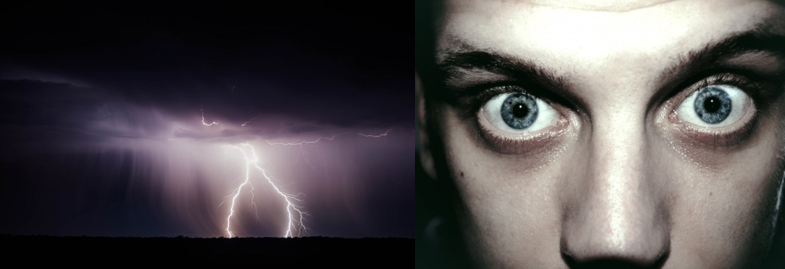
We call the ability to predict our own future emotions “affective forecasting” (1). Think of it as a weather forecast, but instead of predicting sunshine or thunderstorms, you are predicting how you will feel. Just like a weather forecast, our predictions can be more or less accurate. We can get our forecasts wrong, and they can also be biased – we might systematically expect to feel better or worse than we actually do.
In a recent collaborative project with the Recreational Fear Lab, we wanted to take affective forecasting research out of the laboratory and into the real world. So where better to study emotional predictions than an environment specifically designed to make people feel uncertain, scared, and excited?
We headed to Dystopia, an immersive and interactive horror experience in Vejle, Denmark.
Why study fear in a horror attraction?
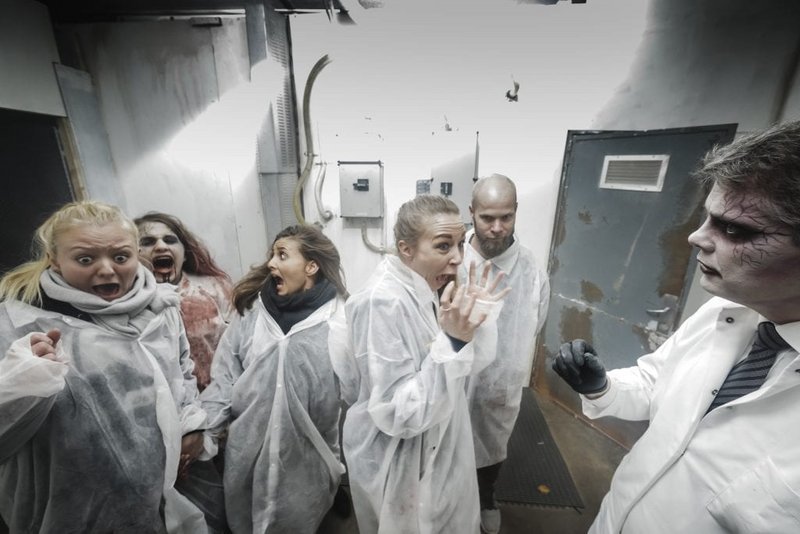
Horror attractions provide a fascinating setting for psychologists. They create genuine uncertainty – you don't know what is going to happen, where the next scare will come from, or how intense the experience will be. Yet, at the same time, you know that you have chosen to be there and that the threat isn't real.
This makes horror attractions an unusual kind of psychological laboratory: a place where people voluntarily enter an uncertain situation designed to provoke strong emotions, including both fear and fun. This was not the Recreational Fear Lab’s first visit to Dystopia. In a previous study, they showed a kind of “Goldilocks” effect: people had the most fun when the fear they experienced was just right – not so scary it became overwhelming, but not so mild it became boring (2). This suggests that part of the appeal of horror is finding the sweet spot where fear is fun.
So what determines whether we expect an uncertain experience to be exciting or overwhelming in the first place? This led us to wonder whether people’s expectations about Dystopia might depend on how comfortable they are with uncertainty.
Why does uncertainty matter?
Most of us would probably prefer to know what is coming rather than be left wondering. But people differ considerably in how they respond to uncertainty.
Intolerance of uncertainty (IU) describes a tendency to find uncertain situations particularly difficult or distressing. For someone high in IU, even relatively everyday uncertainties can be uncomfortable – not knowing what your partner has planned for your birthday, waiting to hear whether you got a job, or making a decision when you don't know how things will turn out.
When uncertainty feels threatening, people may try to reduce it. They might seek reassurance, gather lots of information, carefully plan what will happen, procrastinate over decisions, or avoid uncertain situations altogether. We call these strategies safety seeking behaviours.
These strategies can provide short-term relief. But they may also have an unintended consequence: if we continually avoid uncertainty, we have fewer opportunities to discover that uncertainty isn't necessarily as bad as we imagined – and might even be enjoyable.
This led us to an interesting question.
Could people who are more intolerant of uncertainty expect an experience like Dystopia to be particularly unpleasant, only to discover that it wasn't as bad as they had predicted?
Putting emotional forecasts to the test
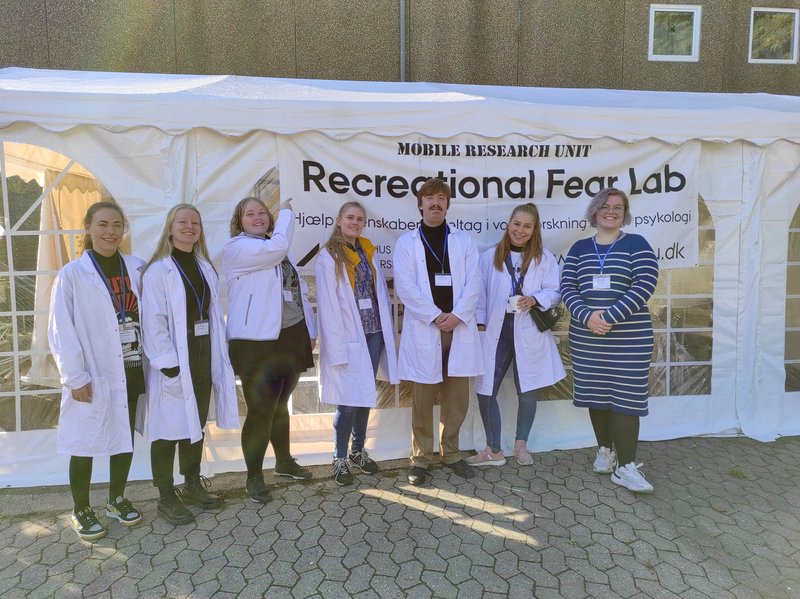
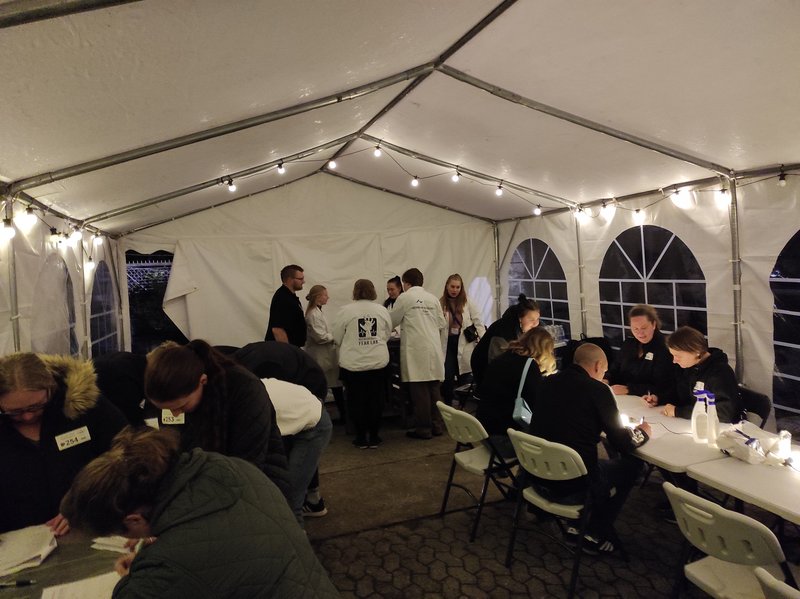
To find out, our army of Recreational Fear Lab interns put on their white coats and headed to Dystopia (3).
We asked people about their expectations as they waited in line to enter the event. We asked them how much they expected to experience 12 different emotions, including excitement, happiness, nervousness, fear, sadness and misery.
We then asked the same questions after they emerged from the attraction.
This allowed us to compare each person's emotional forecast with their actual experience.
We also asked participants to complete a short questionnaire measuring their intolerance of uncertainty. This allowed us to examine whether people who were more uncomfortable with uncertainty differed in their emotional predictions – and in their actual experiences.
So, were the forecasts accurate?
Overall, people were somewhat pessimistic forecasters. Before entering Dystopia, people expected to experience fewer positive emotions and more anxious and negative emotions than they actually experienced. In other words, the experience was, on average, less unpleasant and more positive than people had predicted.
But there was an important difference between people who were higher and lower in intolerance of uncertainty. People with higher IU expected to experience fewer positive emotions and more anxious and negative emotions than people with lower IU. But they weren’t just being more pessimistic. Importantly, they actually did experience fewer positive emotions and more anxious and negative emotions.
So, their concerns weren't simply unfounded: people who found uncertainty more difficult really did experience the horror attraction differently and they enjoyed it less. However, there was an interesting twist. The high-IU group were more pessimistic about their negative emotions, including feeling sad or miserable. These emotions were not as bad as they had expected.
There was also something interesting about people’s forecasts for their positive emotions. For those with lower IU, higher confidence in expectations about positive emotions was related to more accurate forecasting. In contrast, for those with higher IU, confidence in expectations about positive emotions was not related to accuracy, so these people were less aware of how well they could forecast their positive emotions.
This suggests that intolerance of uncertainty may influence not only how we experience uncertain situations, but also how we imagine we will experience them.
Why does this matter?
This finding matters beyond horror attractions. Imagine that you’re invited to a party where you won't know many people. You might predict that you'll feel intensely awkward and anxious. Or perhaps you're considering applying for a new job, but you imagine that the uncertainty of starting somewhere new will be overwhelming.
If you tend to find uncertainty particularly difficult, your emotional forecast might become part of the decision-making process: “I know I'm going to hate this.” That prediction can then encourage avoidance, but avoiding the situation means you never get to discover whether your forecast was accurate. This is part of how intolerance of uncertainty is linked to anxiety and can lead to a negative cycle that stops us from doing things that we might actually enjoy (4).
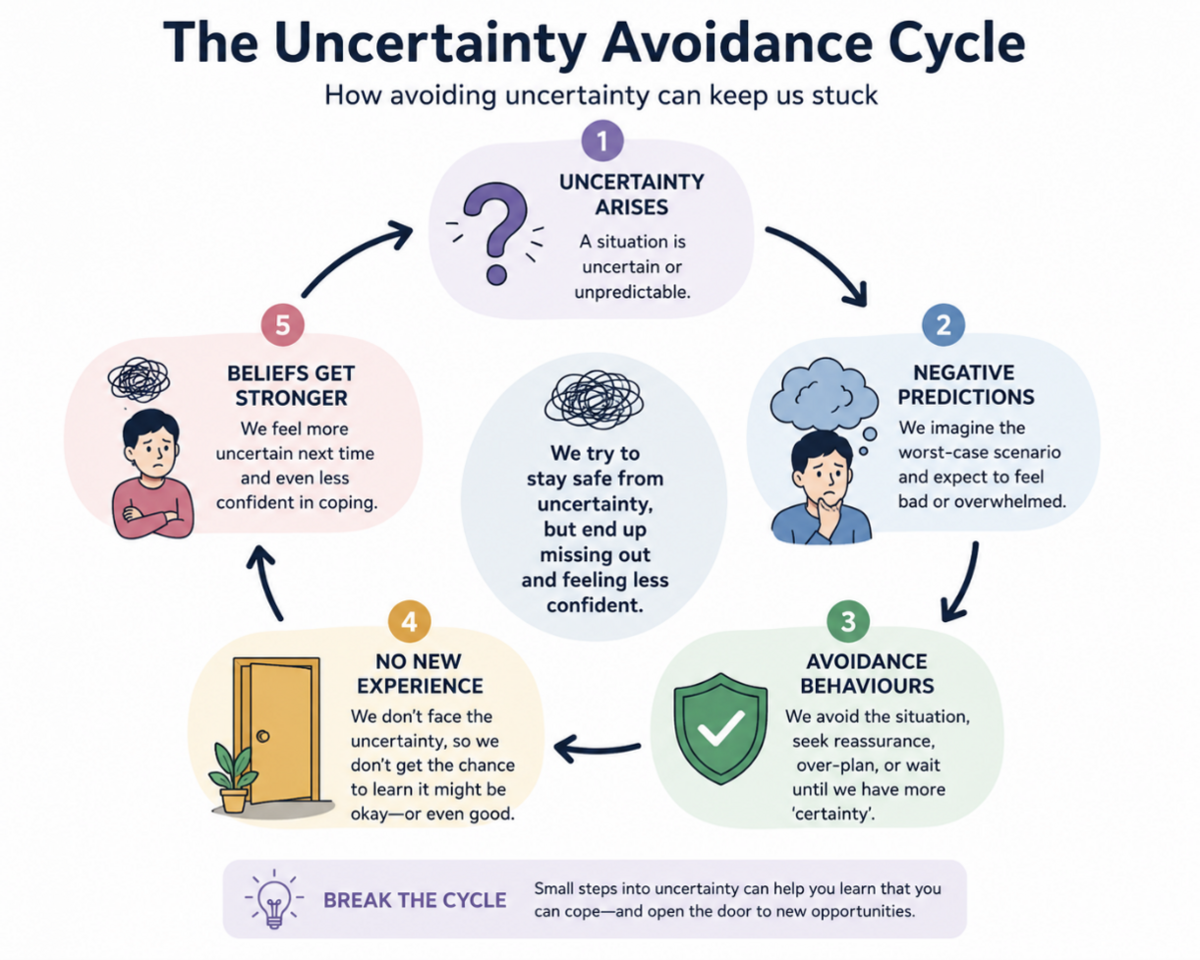
Our findings suggest that, for some people, there may be value in breaking that cycle. Not by forcing ourselves into every uncertain or frightening situation, but by recognising that our predictions about how we will feel are predictions – not facts. When we allow ourselves to test out those predictions by taking small steps into uncertain situations, we can learn and gain confidence in our ability to cope with uncertainty.
So, should you trust your emotional weather forecast?
Not necessarily. Our ability to anticipate our future emotions is useful. We need to make predictions about how experiences will make us feel when deciding what to do. But those predictions aren't always accurate, and they can be systematically biased.
The next time you find yourself thinking “I know I'll hate this” about an uncertain situation, it might be worth pausing to ask, “How do I know?”. Perhaps your emotional forecast is right, but perhaps, like the weather forecast, there's a chance of unexpected sunshine. Sometimes, you don't know how you'll feel until you step inside.
Reference list
1. Wilson TD, Gilbert DT. Affective Forecasting: Knowing What to Want. Curr Dir Psychol Sci. 2005 Jun 1;14(3):131–4. doi:10.1111/j.0963-7214.2005.00355.x
2. Andersen MM, Schjoedt U, Price H, Rosas FE, Scrivner C, Clasen M. Playing With Fear: A Field Study in Recreational Horror. Psychol Sci. 2020 Dec 1;31(12):1497–510. doi:10.1177/0956797620972116
3. FitzGibbon L, Morriss J, Clasen M, Wake S, Nesbit R, Malmdorf Andersen M, et al. Affective forecasting during a horror attraction: Insights into Intolerance of Uncertainty. Journal of Anxiety Disorders. 2025 Aug 1;114:103046. doi:10.1016/j.janxdis.2025.103046
4. Dodd HF, Lester KJ. Adventurous Play as a Mechanism for Reducing Risk for Childhood Anxiety: A Conceptual Model. Clin Child Fam Psychol Rev. 2021 Mar 1;24(1):164–81. doi:10.1007/s10567-020-00338-w