
"Data Modelling and Web Content at Risk" workshop with Lukas Fuchsgruber of Wikimedia Deutschland for Curating Data Students
Students of the Curating Data course explored digital preservation through Wikidata and Linked Open Data, engaging with data modelling and open knowledge graphs to help safeguard endangered web content in the workshop Data Modelling and Web Content at Risk, led by Lukas Fuchsgruber.


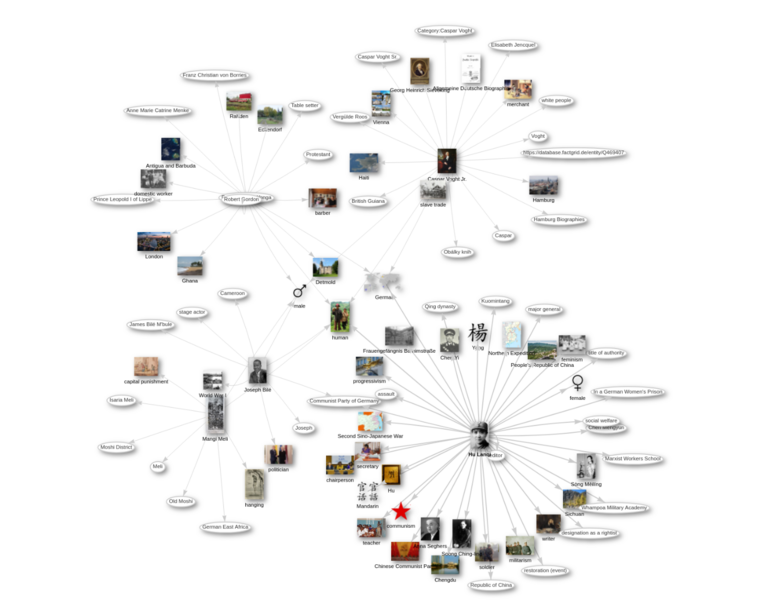
On the 7 and 8 October, students from the Curating Data course, part of the Critical Data Studies program, participated in a hands-on workshop titled Data Modelling and Web Content at Risk. The session explored how data modelling and the transformation of text into structured data can contribute to the preservation and reusability of digital knowledge facing disappearance.
While web resources at risk are commonly preserved through web archiving—the direct copying of websites and digital materials, as practiced in initiatives like the Internet Archive—this workshop took a different approach. It asked: How can data modelling and structured, linked data support the findability, accessibility, interoperability, and reusability (FAIR) of knowledge at risk?
Under the guidance of Lukas Fuchsgruber, students engaged with examples of “data at risk,” experimenting with Wikidata and Linked Open Data (LOD) tools to generate structured and referenced information. Working with research gathered in the framework of Dekoloniale Memory Culture in the City (Dekoloniale)—a project and website dedicated to critically engaging with colonial histories in urban space—participants explored how open knowledge graphs can enhance data visibility and enable long-term cultural preservation.
The workshop also encouraged reflection on the curatorial dimensions of data work, emphasizing that modelling, linking, and referencing are not only technical processes but also interpretative and cultural acts that shape how digital knowledge is created, shared, and sustained within the digital commons.
Lukas Fuchsgruber is an art historian and museum researcher based in Berlin. In 2025, he joined the Education Policy and Digital Cultural Commons team at Wikimedia Deutschland e.V. as Manager Digital Cultural Heritage. Previously, he worked for several years as a researcher in the project Museums and Society – Mapping the Social, conducting a case study on the relevance of digital museum collections for critical museology. His book, Museen und die Utopie der Vernetzung, is published in October 2025.