Aarhus University Seal

Recent Publications

Books

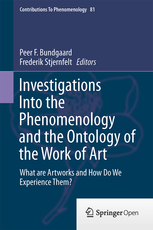
Investigations Into the Phenomenology and the Ontology of the Work of Art: What are Artworks and How Do We Experience Them?

Bundgaard, Peer F., Stjernfelt, Frederik (Eds.) 2015

This book investigates the nature of aesthetic experience and aesthetic objects. Written by leading philosophers, psychologists, literary scholars and semioticians, the book addresses two intertwined issues. The first is related to the phenomenology of aesthetic experience: The understanding of how human beings respond to artworks, how we process linguistic or visual information, and what properties in artworks trigger aesthetic experiences. The examination of the properties of aesthetic experience reveals essential aspects of our perceptual, cognitive, and semiotic capacities.  The second issue studied in this volume is related to the ontology of the work of art: Written or visual artworks are a specific type of objects, containing particular kinds of representation which elicit a particular kind of experience. The research question explored is: What properties in artful objects trigger this type of experience, and what characterizes representation in written and visual artworks? The volume sets the scene for state-of-the-art inquiries in the intersection between the psychology and ontology of art. The investigations of the relation between the properties of artworks and the characteristics of aesthetic experience increase our insight into what art is. In addition, they shed light on essential properties of human meaning-making in general.

Buy it on Springer.
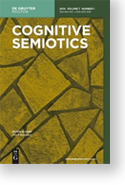

Cognitive Semiotics

Editor-in-Chief: Bundgaard, Peer F.
2 Issues per year
DE GRUYTER MOUTON

Cognitive Semiotics is a peer-reviewed, multidisciplinary journal devoted to high-quality research, integrating perspectives, methods and insight from cognitive science, cognitive linguistics and semiotics, placing meaning-making into the broader context of cognitive, social, and neurobiological processes. The journal is a platform for the study of meaning-making writ large: in our interactions with the surroundings in all domains, in the natural as well as in the social world, in language and other sign vehicles, as well as in perception, and in action.

All articles from issues 1 through 5 can be downloaded for free. Click here.

More information and subscription.


Linguistic Coordination: Models, Dynamics and Effects, Thematic Issue of New Ideas in Psychology

Fusaroli, R. & Tylén, K. (eds.) 2013. 

The contributors to this issue of New Ideas in Psychology pursue a radically different approach, that of language as an interaction system (Bickhard, 2007a). Like any human behavior, language is considered an open, multi-modal system, deeply embedded in and shaped by continuous functional interactions with the surrounding social, cultural and material environment (Dale, Fusaroli, Duran, & Richardson, 2014; Lupyan & Dale, 2010; Rączaszek-Leonardi & Kelso, 2008; Tylén, Fusaroli, Bundgaard, & Østergaard, 2013). Consequently, the study of language shifts its focus from individual inner linguistic representations to the public perceivable and communicational nature of linguistic forms (Fowler, 2013; Port, 2007). The primary goal of linguistic activity is not to construct well-formed sentences, but to maintain and regulate social affiliation and relations, share experiences and accomplish joint goals, etc. In other words, language is first and foremost a matter of coordination: coordination between interlocutors and their linguistic behaviors, between contexts and communities, between different time scales of linguistic processes, etc. (Beckner et al., 2009; Bickhard, 2009; Fusaroli & Tylén, 2012; Greenspan & Shanker, 2007). However, the approach to language as coordination dynamics present us with (at least) three fundamental challenges: i) How do we model language as coordination and what are the consequences? ii) If language is an open system, how do we then define and demarcate the object of scientific inquiry? iii) If grammaticality and acceptability are not by themselves the primary goals of linguistic processes how do we assess the functionality of language?
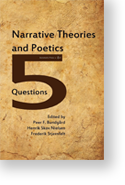

Narrative Theory and Poetics: 
5 Questions

Edited by Peer Bundgaard, Henrik Skov Nielsen and Frederik Stjernfelt

Excerpt from the book's preface:

In the present interview book, Narrative Theory and Poetics: 5 Questions, eminent narratologists, literary scholars, poeticians, stylisticians and philosophers answer five simple and broad questions. As is generally the case in the 5 Questions Series, the questions are intended to give the authors an occasion to outline their intellectual biography -- in whatever detail they find necessary, with or without the anecdotes of life -- as well as to lay down their idea of the state of the art of the domain of research to which they have devoted their work including the future challenges and unsolved issues it is still ripe with ...

Edited by Peer Bundgaard, Henrik Skov Nielsen and Frederik Stjernfelt

Automatic Press / VIP, 2011
ISBN 9788792130426
Buy it on Amazon


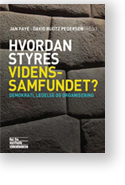
Hvordan styres videnssamfundet? 
Demokrati, ledelse og organisering

Redigeret af Jan Faye og 
David Budtz Pedersen

Debatten om ledelse og styring af landets universiteter kører på fuldt blus i disse dage. Der er fokus på, hvad de nye krav til forskere og studerende betyder for universiteterne og deres evne til at skabe viden. Men hvordan skal vi forholde os til debatten, og hvor fører den hen? Det giver denne bog nogle fagligt funderede bud på.

400 sider | 398 kr.

ISBN: 978-87-768-3026-7 
1. udgave 2012

Forlaget Nyt fra Samfundsvidenskaberne
Bestil bogen hos forlaget


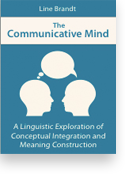
The Communicative Mind: A Linguistic Exploration of Conceptual Integration and Meaning Construction

Line Brandt, 2012 

Advancing a research approach to meaning construction connecting Linguistics, Philosophy, Literary Studies, Neurophenomenology, Cognitive Science and Semiotics, The Communicative Mind presents an interdisciplinary exploration of the various ways in which the intersubjectivity of communicating interactants manifests itself in language. The book supports its view of the mind as highly conditioned by the domain of interpersonal communication by an extensive range of empirical linguistic data from fiction, poetry and everyday discourse. Among recent theoretical advances in what Brandt refers to as the cognitive humanities is Fauconnier and Turner’s theory of conceptual integration which, offering a bridge between pragmatics and semantics, has proved widely influential in Cognitive Poetics and Linguistics. With its constructive criticism of Fauconnier and Turner’s hypothesis that the “blending” of mental spaces is a general mechanism of cognition, Brandt’s book brings the scope and applicability of Conceptual Integration Theory into the arena of scientific debate. 

Preview available: http://www.amazon.com/The-Communicative-Mind-Exploration-Construction/dp/1443841447


All publications

Sort by: Date | Author | Title

Østergaard, S. (2007). The Dynamics of Interaction and Consciousness. Cognitive Semiotics, (1), 111-122.
Østergaard, S. (2008). Art and Cognition. Cognitive Semiotics, (3), 114-133.
Østergaard, S. (2009). Imitation, Mirror Neurons, and Meta-cognition. In W. Wildgen & B. van Heusden (Eds.), Metarepresentation, Self-Organization and Art (pp. 201-211). Peter Lang.
Østergaard, S. (2010). René Thom: The Recognition of Forms. An Apologia for Realism. In W. Wildgen & P. A. Brandt (Eds.), Semiosis and Catastrophes: René Thom's Semiotic Heritage (pp. 35-43). Peter Lang.
Østergaard, S. (2012). Imitation, Mirror Neurons and Material Culture. In Excavating the mind: cross-sections through culture, cognition and materiality (pp. 25-38). Aarhus Universitetsforlag.
Østergaard, S. (2013). A cognitive perspective on irony. In M. Birkelund (Ed.), Ironistik: ironi i et multidisciplinært perspektiv (pp. 67-78). Aarhus Universitet. Institut for Æstetik og Kommunikation.
Olsen, K. & Tylén, K. (2023). On the social nature of abstraction: cognitive implications of interaction and diversity. Philosophical Transactions of the Royal Society B: Biological Sciences, 378(1870), Article 20210361. https://doi.org/10.1098/rstb.2021.0361
Nielsen, A. H., Gebauer, L., Mcgregor, W. & Wallentin, M. (2014). Asymmetry effects on the mismatch response (MMR) to speech sounds: an MEG/ERF study of [t] vs. [d]. Poster session presented at SNL 2014 - Society for the Neurobiology of Language, Amsterdam, Netherlands.
Nielsen, R. H. (2015). The sound of life: auditory cues to animacy. Aarhus University, Center of Semiotics.
Nielbo, F. L., Steele, D. & Guastavino, C. (2013). Investigating soundscape affordances through activity appropriateness. Meetings on Acoustics. Proceedings, 19. https://doi.org/10.1121/1.4800502
Mønster, D., Fusaroli, R., Tylén, K., Roepstorff, A. & Sherson, J. (2016). Inferring causality from noisy time series data: A test of Convergent Cross-Mapping. In V. Méndez Muñoz, O. Gusikhin & V. Chang (Eds.), COMPLEXIS 2016 - Proceedings of the 1st International Conference on Complex Information Systems (pp. 48-56). SCITEPRESS Digital Library. https://doi.org/10.5220/0005932600480056
Lambrechts, A., Yarrow, K., Maras, K., Fusaroli, R. & Gaigg, S. (2014). Impact of the Temporal Dynamics of Speech and Gesture on Communication in Autism Spectrum Disorder. Poster session presented at IMFAR 2014, Atlanta, United States.
Lambrechts, A., Gaigg, S., Yarrow, K., Maras, K. & Fusaroli, R. (2015). Temporal Dynamics of Speech and Gesture in Autism Spectrum Disorder. In CogInfoCom 2014 - 5th IEEE International Conference on Cognitive Infocommunications (pp. 349-353). IEEE.
Lambrechts, A., Yarrow, K., Maras, K., Fusaroli, R. & Gaigg, S. (2015). Quantifying the Use of Gestures in Autism Spectrum Disorder. Abstract from IMFAR 2015, Salt Lake City, United States. https://imfar.confex.com/imfar/2015/webprogram/Paper20072.html
Lambrechts, A., Yarrow, K., Maras, K., Fusaroli, R. & Gaigg, S. (2015). Quantifying the use of gestures in Autism Spectrum Disorder. Poster session presented at IMFAR 2015, Salt Lake City, United States.
Kristensen, L. B. & Wallentin, M. (2015). Putting Broca’s region into context – fMRI evidence for a role in predictive language processing. In R. M. Willems (Ed.), Cognitive Neuroscience of Natural Language Use (pp. 160-181). Cambridge University Press. https://doi.org/10.1017/CBO9781107323667
Kristensen, L. B., Engberg-Pedersen, E. & Wallentin, M. (2014). Context predicts word order processing in Broca’s region. Journal of Cognitive Neuroscience (Online), 26(12), 2762-2777. https://doi.org/10.1162/jocn_a_00681
Ishkhanyan, B., Trecca, F., Højen, A., Bleses, D., Johansson, C., Tylén, K. & Christiansen, M. H. (2019). Has she sent or lit an email? Preliminary results of a Danish and Norwegian categorical perception study. Abstract from The Seventh Conference of the Scandinavian Association for Language and Cognition, SALC 7, Aarhus, Denmark.
Ishkhanyan, B., Højen, A., Fusaroli, R., Johansson, C., Tylén, K. & Christiansen, M. H. (2019). Wait for it! Stronger influence of context on categorical perception in Danish than Norwegian. Paper presented at The 41st Annual Meeting of the Cognitive Science Society, Montreal, Canada.
Hjortkjær, J. & Nielbo, F. L. (2010). A Perceptual Study on Dynamical Form in Music. In Proceedings of SMC Conference 2010, Barcelona http://smcnetwork.org/.
Heimann, K., Fusaroli, R., Gonzalez de la Higuera Rojo, S., Johannsen, N. N., Riede, F., Fay, N., Lombard, M. & Tylén, K. (2017). The adaptive evolution of early human symbolic behavior. In R. Granger, U. Hahn & R. Sutton (Eds.), Proceedings of the 39th Annual Meeting of the Cognitive Science Society: CogSci 2017 (pp. 494). Cognitive Science Society. https://mindmodeling.org/cogsci2017/papers/0100/paper0100.pdf
Fusaroli, R. & Ferri, G. (2009). Which narrations for persuasive technologies?: Habits and procedures in Ayiti: The Cost of Life. In Acts of the AAAI Symposium on Intelligent Narrative Technologies II Stanford University Press.
Fusaroli, R. & Vandi, C. (2009). More than a metaphor. In J. Zlatev, M. Andrén, M. Johansson Falck & C. Lundmark (Eds.), Studies in Language and Cognition Cambridge Scholars Press.