Publications
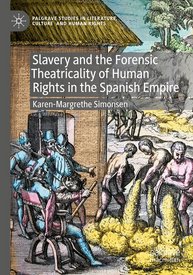
Slavery and the Forensic Theatricality of Human Rights in the Spanish Empire
Karen-Margrethe Simonsen – Palgrave Studies in Literature, Culture and Human Rights, 2023, 320 pages
This book is a study of the forensic theatricality of human rights claims in literary texts about slavery in the sixteenth and the nineteenth century in the Spanish Empire. The book centers on the question: how do literary texts use theatrical, multisensorial strategies to denunciate the violence against enslaved people and make a claim for their rights? The Spanish context is particularly interesting because of its early tradition of human rights thinking in the Salamanca School (especially Bartolomé de Las Casas), developed in relation to slavery and colonialism. Taking its point of departure in forensic aesthetics, the book analyzes five forms of non-narrative theatricality: allegorical, carnivalesque, tragicomic, melodramatic and tragic.
Teaching Shakespeare's Emotions
Anne Sophie Refskou – Elements in Shakespeare and Pedagogy, Cambridge University Press, 2026, 102 pages
Drawing on critical insights from the history of emotion and Shakespearean emotion studies, this Element offers a pedagogy rooted in a historicist approach as a stimulating alternative to the teaching of Shakespeare's emotions as universally and transhistorically relatable. It seeks to provide a roadmap – by way of contextual and analytical frameworks and suggested learning activities – for teaching students how to mind the gap between Shakespeare's emotional moment and their own. The benefits to this approach include not only students' enhanced understanding of Shakespeare's plays in the context of early modern emotion culture but also their enhanced ability to think historically and critically about emotions, both in Shakespeare's day and now.
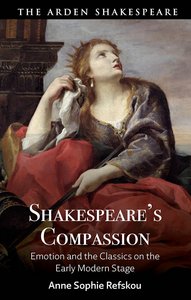
Shakespeare’s Compassion: Emotion and the Classics on the Early Modern Stage
Anne Sophie Refskou – The Arden Shakespeare, Bloomsbury Publishing, 208 pages
Drawing on the history of emotions and on Shakespearean classical studies, Anne Sophie Refskou argues both that Shakespeare's compassion expresses his own historical and cultural moment and is at the same time the product of his close engagement with literature from the classical past. In so doing, she traces a set of recurrent strands in Shakespeare's engagement with discourses of compassion throughout his playwriting career, situating them in relation to plays written for the early modern stage by contemporaries, including Thomas Kyd, George Peele, Christopher Marlowe, Thomas Nashe, John Fletcher and Philip Massinger. Individual chapters offer readings of Titus Andronicus, Richard III, Hamlet and King Lear by way of comparative analysis of key classical texts – including Euripides' Hecuba and The Trojan Women, Vergil's Aeneid and Ovid's Metamorphoses – from which Shakespeare and his fellow playwrights drew sustained inspiration.